
Picture a beige tower under a desk in late 1999. A 17-inch CRT that takes two people to carry, a Celeron or a Pentium III, a tangle of Ethernet cables strung across someone’s living room for the weekend LAN party, and a Quake III Arena timedemo running on a loop while everybody argues about whose card is faster. That argument changed on August 31, 1999. In Palm Springs, NVIDIA unveiled the GeForce 256 and, in its own press release, called it “the world’s first graphics processing unit (GPU).” Twenty-seven years later, every card in our GPU wiki carries that label.
Before the GeForce 256, your CPU did the geometry. It worked out where every vertex sat and how light fell on it, then handed the result to the 3D card to draw. NVIDIA moved that transform and lighting work onto the graphics chip itself. In 1999 that sounded like marketing. It turned out to be the template for everything since.

The card that named a category
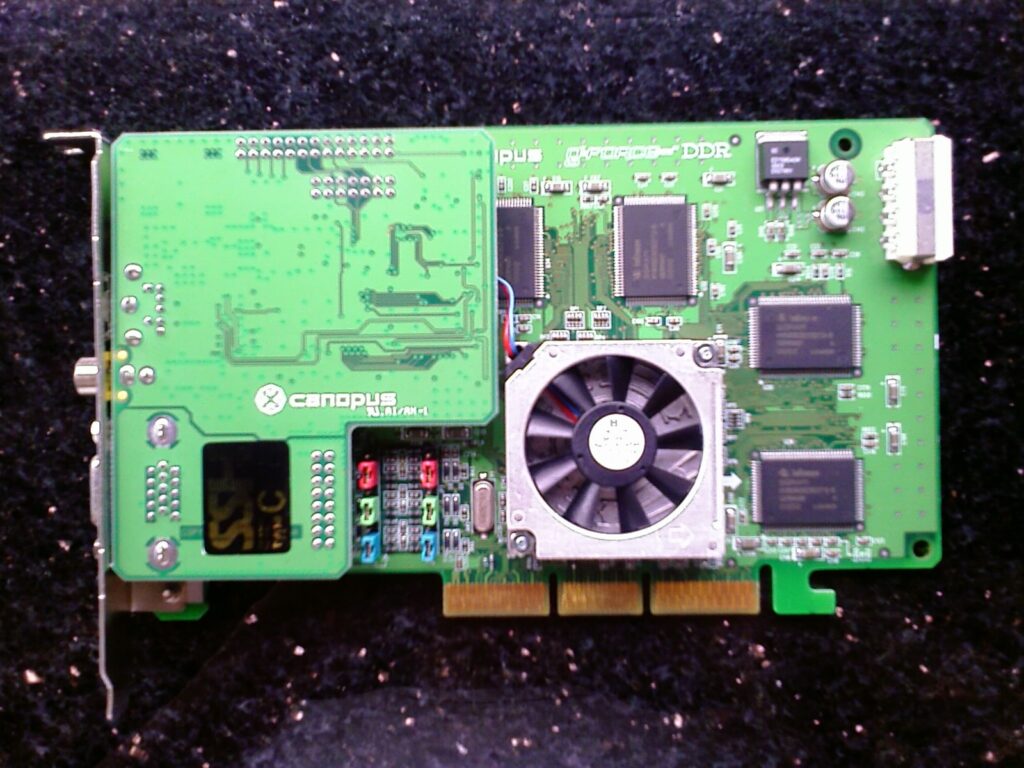
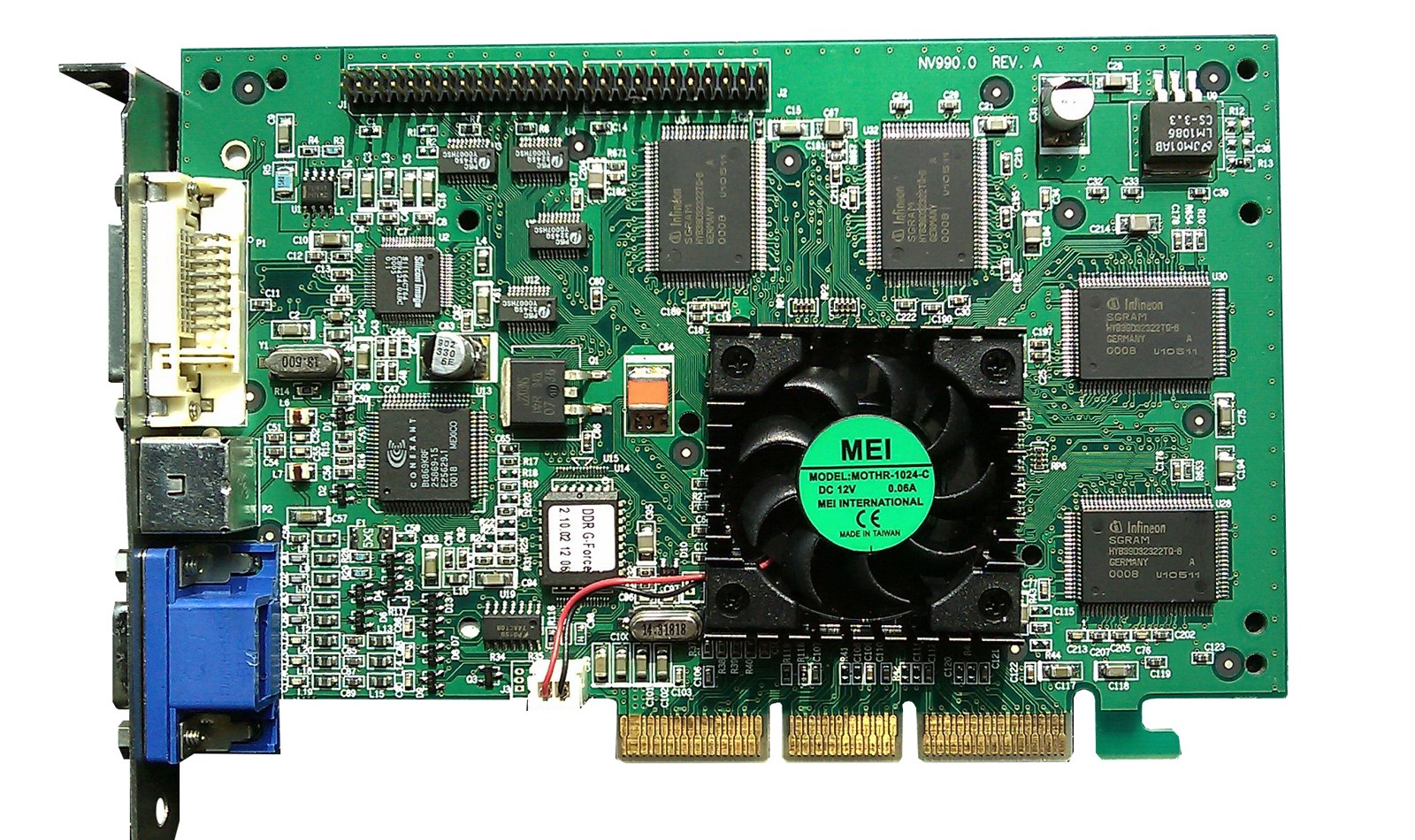
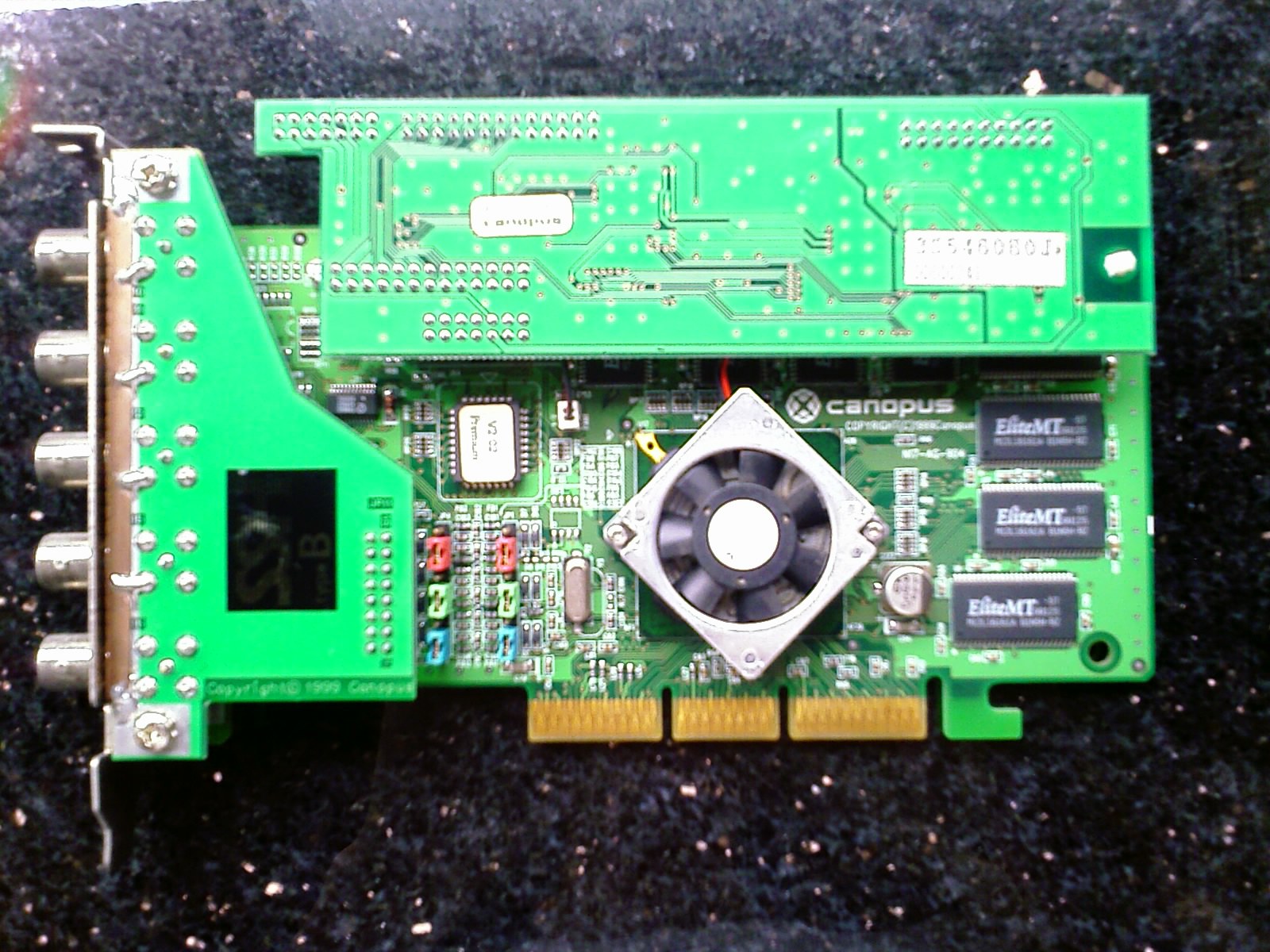
NVIDIA’s definition of a GPU was precise to the point of being tailor-made: “a single-chip processor with integrated transform, lighting, triangle setup/clipping, and rendering engines that is capable of processing a minimum of 10 million polygons per second.” Only one chip on the market fit it. The release promised 15 million sustained polygons per second, 480 million pixels per second, AGP 4X with Fast Writes and support for up to 128MB of memory. Board partners named in the announcement included Creative Labs, ELSA, Guillemot, ASUSTeK, Canopus and Leadtek, which is why today you find the chip under names like 3D Blaster Annihilator, Erazor X and 3D Prophet.
Wikipedia’s GeForce 256 article dates the first SDR boards to October 11, 1999, with the DDR version following in mid-December. That second card is the one collectors chase. The “256” referred to NVIDIA’s QuadPipe engine, four 64-bit pixel pipelines with one texture unit each.
Even the transistor count is a small piece of retro folklore. NVIDIA’s launch release says “nearly 23 million transistors, more than twice the complexity of the Pentium III.” Wikipedia’s spec table lists 17 million. We have no die-level source that settles it, so both numbers stand with their owners.
How it stacked up in 1999
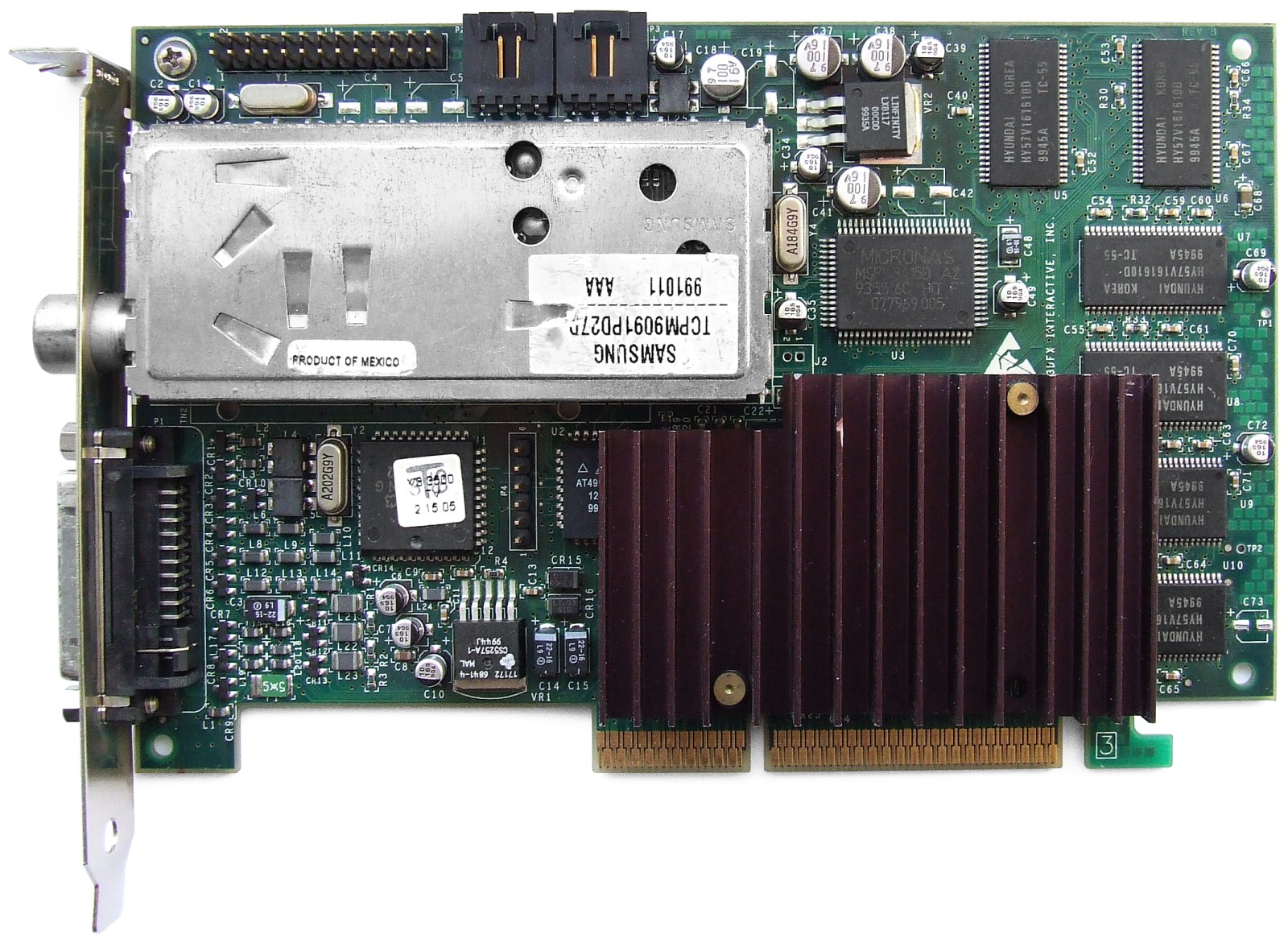
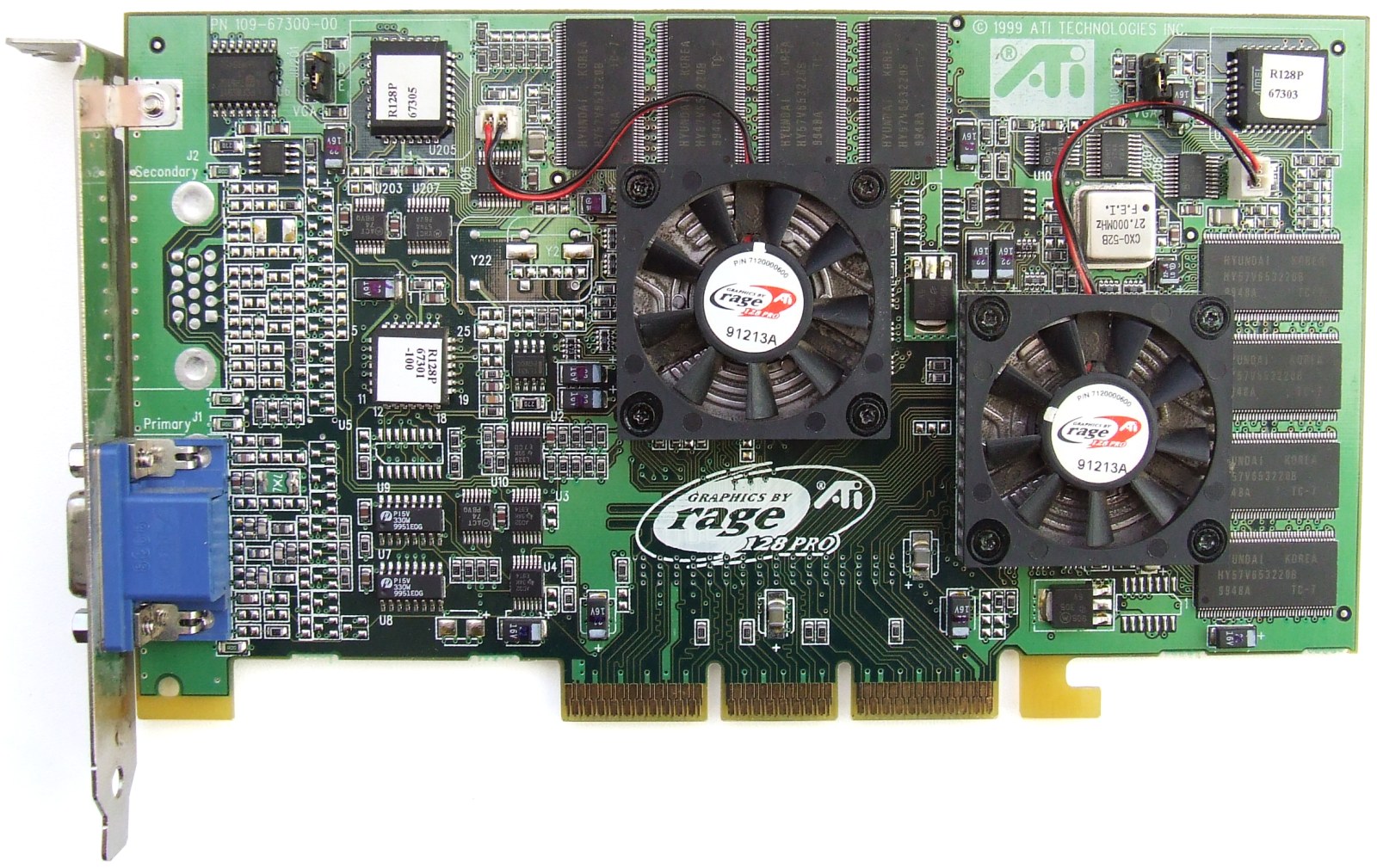
The GeForce 256 landed in the most crowded year PC graphics has ever had. 3dfx had the Voodoo3 and its own Glide API. NVIDIA’s own RIVA TNT2 Ultra was still on shelves. Matrox had the G400 with its gorgeous 2D output and environment-mapped bump mapping. ATI answered with the Rage Fury MAXX, two Rage 128 Pro chips on one board, and S3 went from the Savage3D and Savage4 to the Savage 2000, which Wikipedia’s S3 Savage article lists as the only other gaming chip of 1999 with hardware T&L.
| Card | Maker | Arrived | Core / memory clock | Memory | Hardware T&L | API level |
|---|---|---|---|---|---|---|
| GeForce 256 (SDR) | NVIDIA | Oct 1999 | 120 / 166 MHz | 32MB SDR | Yes | DirectX 7 |
| GeForce 256 DDR | NVIDIA | Dec 1999 | 120 / 150 MHz DDR | 32MB DDR | Yes | DirectX 7 |
| RIVA TNT2 Ultra | NVIDIA | 1999 | 150 / 183 MHz | 32MB | No | DirectX 6 |
| Voodoo3 3500 | 3dfx | 1999 | 183 / 183 MHz | 16MB | No | Glide, DirectX 6 |
| Voodoo3 3000 | 3dfx | 1999 | 166 / 166 MHz | 16MB | No | Glide, DirectX 6 |
| Millennium G400 MAX | Matrox | 1999 | 166 / 200 MHz | 32MB | No | DirectX 6 |
| Rage Fury MAXX | ATI | Late 1999 | 125 / 143 MHz | 64MB (2 x 32MB) | No | DirectX 6 |
| Savage4 | S3 | Early 1999 | 125 / 125 to 143 MHz | Up to 32MB | No | DirectX 6 |
| Savage 2000 | S3 | Late 1999 | 125 / 155 MHz | 32MB | Yes | DirectX 7 |
| Radeon DDR (the “Radeon 256”) | ATI | Spring 2000 | n/a | 32 or 64MB DDR | Yes | DirectX 7 |

On paper, the GeForce looked slower. Its 120 MHz core was the lowest clock in the high end, while the Voodoo3 3500 ran core and memory at 183 MHz. The difference was architecture: four pipelines against two, and a geometry engine nobody else in the top tier had. ATI’s reply in 2000 was the Radeon. Wikipedia’s R100 article notes it was described as the “Radeon 256” before launch and shipped as the Radeon DDR in spring 2000, with its own T&L engine.

The frame rates
The best single snapshot of that winter is AnandTech’s GeForce 256 DDR review from December 25, 1999. It put eleven cards through Quake III Arena on the same Pentium III 700 with 128MB of PC133 memory under Windows 98 SE, using NVIDIA’s Detonator 3.65 drivers and 3dfx’s 1.03.04.
At 1024 x 768 in 16-bit color, the GeForce 256 DDR averaged 84.6 fps. The next card, the Rage Fury MAXX, managed 60. The SDR GeForce scored 54.7, ahead of the G400 MAX at 52.7 and the Voodoo3 3500 at 47.1, while the TNT2 Ultra sat at 39.3. Switch to 32-bit color and the gap grows: 63.9 fps for the DDR card against 36.4 for the SDR version and 30.7 for the TNT2 Ultra. The Voodoo3 could not render 32-bit at all.
Drop the resolution to 640 x 480 and the story changes. On the same machine the DDR card led with 108.6 fps, but the Voodoo3 3500 (91.8) and the SDR GeForce (91.6) were neck and neck. That is the honest summary of 1999: the GeForce 256 DDR was the fastest card you could buy, and the SDR version was only a clear win once resolution and color depth went up. AnandTech’s October verdict on the first boards, in its review titled “To buy or not to buy”, was that NVIDIA had the fastest 3D accelerator on the market, held back by immature drivers and a lack of software that used its T&L engine.

What collectors pay for one now
Here is where the nostalgia turns into money. There is no public price index for 27-year-old graphics cards, so what follows is a snapshot of real sales and listings, not a trend line.
- Digilogue Museum’s eBay sold database for the US lists these recent GeForce 256 sales: $50.95 for a tested ASUS AGP-V6600, $69.99 for each of two ELSA Synergy Force SDR cards, $75 for a VisionTek DDR, $79.95 for an ELSA Erazor X, $100 for a tested Creative CT6960 SDR and $120 for a sealed ELSA Gloria II, the Quadro version. That is seven sales across roughly the past seven months.
- The same database for the UK shows six sales: £44.99 for a Guillemot 3D Prophet, £47 for a Synergy Force, £50 for a Creative SDR, £65 for a Creative Annihilator, £80 for a Creative DDR and £89.99 for an ASUS V6800 Deluxe DDR.
- A 32MB DDR card from a UK seller sold on October 20 at a listed price of £133.94. It was a Best Offer listing, so the final figure may have been lower.
- In Germany, an ELSA Erazor X² DDR on Kleinanzeigen, posted October 4 and described as cleaned and tested, asks €229 or best offer. A tested DDR card on Vinted asked €140 when we checked on November 1. Both are asking prices, not sales.
The pattern is clear even from a small sample. Most SDR cards from Creative, ELSA, ASUS and Guillemot sold for $50 to $100 or £45 to £65. DDR boards sit higher, roughly $75 to $90 or £80 to £90 in completed sales, and sellers now ask well above that. Boxed or sealed cards and odd variants such as the Quadro bring the most.
Is it appreciating? The longer view points that way, with caveats. In a 2017 VOGONS thread titled “Are GeForce 256 DDR cards that rare?”, collectors described the DDR card as harder to find than most Voodoos, and one long-time member wrote that “only collectors are chasing these cards.” In April 2024, GameStar counted about 25 eBay sales and put a realistic GeForce 256 price at €100 to €200, against €15 to €70 for a TNT2. Different methods, different markets, so we would not draw a curve through them. What they do show is a card that never fell to junk-drawer prices and that sellers now price as a collectible. The DDR version, which forum collectors describe as the scarcer of the two, is the one people actually hunt.
Should you buy one today?
Buy one because you want the first GPU on your shelf or in a period-correct 1999 build, not because it is a good way to play old games. Collectors in that VOGONS thread point out that a later GeForce 2 MX does the same job and runs cooler. If you still want one, check these points.
- SDR or DDR. Sellers often do not say. The DDR board is the faster and scarcer card, and the AnandTech numbers above show how big the gap is at higher resolutions. Read the memory chips in the photos rather than trusting the title.
- Slot. Most boards are AGP, and some PCI versions exist. Make sure your motherboard has a slot that takes it.
- Drivers and platform. Wikipedia lists 71.84, from March 2005, as the last driver for Windows 98 and Me, and 71.89 for Windows 2000 and XP. Plan a Windows 98 SE-era machine, and pick older Detonator releases if you want period performance.
- Tested and cleaned. Pay the premium for a card shown running, and look at the photos for bulging or leaking capacitors, scorched areas and the state of the fan, which on many boards is small and loud by now.
- Box and extras. Original boxes, driver CDs and bundled games push the price up. Decide whether you are buying a display piece or a working part.
Before you buy, cross-check a listing’s specs in the collector and retro section of our GPU wiki. Our guide to reading NVIDIA GPU specs explains why the die name matters, and here that die is NV10, shared by the GeForce 256 and the first Quadro. For what happened to 3dfx after this fight, read our story of the 3dfx deal that ended an era.
Why it still matters
The GeForce 256 did not win every benchmark, and the feature that defined it waited years for games to catch up. Wikipedia notes that hardware T&L only became widely used after the GeForce 2 and ATI’s Radeon arrived, and the same feature level lived on through the GeForce 2 MX and GeForce 4 MX; Half-Life 2 still shipped a DirectX 7 path in 2004. But it moved geometry off the CPU for good and gave the industry its word. For a card that spent two decades in drawers, that is a lot of history to hold in one hand.