
Buying a new graphics card used to come with a small ritual.
Install the driver. Install whatever came on the CD, or later the bundled installer. Then, before even launching a game, run the tech demo.
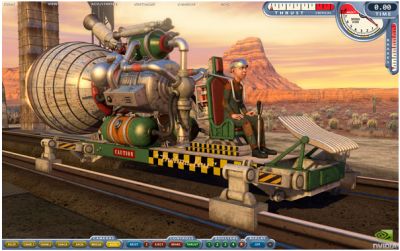
Maybe it was a fairy with hair rendered strand by strand. Maybe a giant built from tessellated rock. Maybe NVIDIA strapped a test pilot to a rocket sled and let PhysX tear the desert apart around him. When DirectX 11 arrived, plenty of people spent nearly as much time flying around UNIGINE Heaven's floating islands as they did launching an actual game.
These programs were not games, and most were not particularly useful benchmarks either. They existed for one reason: to make a new graphics card feel new.
Then, somewhere along the way, most of them stopped showing up.
Tech demos did not literally stop existing in 2019. What mostly disappeared was a specific format: a self-contained executable, downloaded once, run locally on the card that had just replaced your old one, built to put a single new hardware feature directly in front of your eyes instead of explaining it in a spec sheet. NVIDIA kept producing demonstrations after that, Marbles RTX and Racer RTX among them. What follows is the story of why that classic consumer format faded, not a claim that every form of GPU technology demonstration ceased to exist on a specific date.
A new generation, a demo built to show it off
The format worked because each generation of GPUs added something visually obvious and narrow enough to isolate in one scene. NVIDIA's Dawn, released in 2002 for GeForce FX, was built to prove that a fully animated, credible human-like character could run in real time on programmable shaders, at a time when no shipping game attempted anything close. Ten years later, NVIDIA revisited the same character in A New Dawn, and the jump measures the decade directly: the original fairy had 1,700 static hair strands and a roughly 7,000-triangle environment, while the 2012 version, built for GeForce GTX 680 and the rest of the Kepler line, gave her 40,000 physically simulated strands, 4 million triangles, and a tessellated forest scene. It is a straight line from GeForce FX's fixed-function limits to Kepler's DirectX 11 tessellation.
ATI ran the same playbook with a recurring character instead of a one-off. The Double Cross (2004, Radeon X800) introduced Ruby; Dangerous Curves (2005, X850) added real-time motion blur and precomputed radiance transfer to a motorcycle chase; The Assassin and Toy Shop (both 2005, X1800) pushed HDR lighting, dynamic soft shadows, and GPU-driven rain and water simulation. By 2008, AMD's March of the Froblins moved the interesting work off the rendering pipeline entirely: it ran pathfinding and local-avoidance AI for over 3,000 characters directly on the Radeon HD 4800's shader array, a genuine compute demo wearing a rendering demo's clothes.
The golden age: when the demo was part of buying the GPU
The stretch from roughly 2007 to 2012 is the one most people who bought a graphics card in that window will remember best, and it is worth slowing down for.
NVIDIA opened it with Human Head, released in May 2007 for the GeForce 8800 Ultra. It rendered actor Doug Jones's face using a multi-layered skin model with a sum-of-Gaussians approach to subsurface scattering, the technique that lets light bleed through skin instead of just bouncing off it, computing more than 40 million shaded pixels across 17 offscreen textures every frame. Nothing running in a real game looked like it.
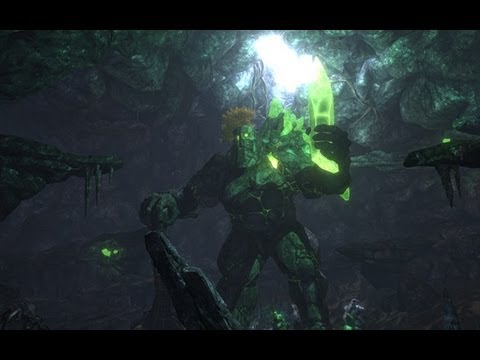
By 2010, DirectX 11 and NVIDIA's Fermi architecture (the GeForce GTX 400 series) gave the format its last full flowering, and NVIDIA released three demos inside a few months of each other that each isolated one idea completely.
Around the same window, Design Garage (March 26, 2010) took a different technical path entirely: it used NVIDIA's OptiX ray tracer running on CUDA to let a viewer rotate and repaint a photorealistic concept car, closer to an offline rendering tool than a DirectX showcase. Later that year, Alien vs. Triangles (November 2010, timed to the GeForce GTX 580 launch) combined tessellation with PhysX again, this time to transform an alien creature's organic skin into an exposed metal skeleton at a touch.

None of these demos were trying to be useful. They were small digital playgrounds built for expensive new hardware, and that was the entire point.
UNIGINE turned the format into a product, then stopped
UNIGINE's benchmarks provide the clearest continuous thread through this era, with Heaven, Valley, and Superposition arriving across an eight-year span. Heaven, unveiled at Microsoft's Windows 7 launch event on October 22, 2009, paired a steampunk village on flying islands with a dragon statue in the town square and became the reference DirectX 11 tessellation showcase of its generation.
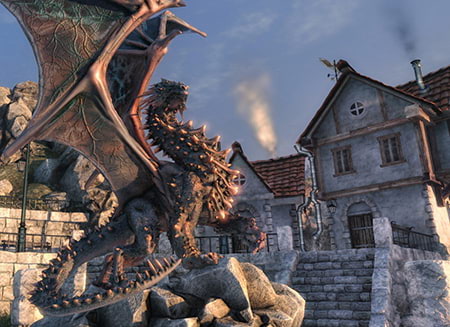
Valley followed in 2013 with an open forested mountain instead of an enclosed set, and Superposition closed out the line in 2017 with a physics-lab interior built to double as a VR stress test.

Superposition is still UNIGINE's newest benchmark environment. Nine years is a long gap for a studio that used to ship a new one every two to four years, and it lines up with the same window everyone else stopped in.
The new GPU features became harder to demonstrate
This is the article's real argument, and it is worth stating plainly: GPU technology became more sophisticated while becoming less easy to package into a single dramatic on/off demonstration.
The older generation of features shared one property. Tessellation was geometry that was visibly simple with the setting off and dramatically more detailed with it on. PhysX was an object count and a trigger; hundreds of things visibly reacted at once. Programmable shaders changed how water, skin, and lighting looked in one frame, directly comparable to the frame before it. Every one of these could be isolated into a single scene, toggled, and understood by watching.
DLSS and FSR-style reconstruction do not work like that. The benefit is temporal and resolution-dependent, best understood by watching motion over several seconds and comparing against a reference, not by looking at one still frame. Frame generation manifests almost entirely through smoothness, something a screenshot cannot show at all. Ray tracing and path tracing are most convincing across an entire game's lighting conditions, not one showcase room, which is why a one-off demo environment struggles to sell them the way a collapsing wall or a field of flying debris could sell PhysX. Mesh shaders and the rest of the current low-level architectural feature set often have no obvious visual signature to a player at all; they change how work gets scheduled on the GPU, not what a specific object looks like.
NVIDIA's own later attempts show the format straining under this. Marbles RTX (2020) was a genuine old-school demo in spirit, built around 165 hand-modeled assets and real-time path tracing in Omniverse, and it needed a Quadro RTX 8000 to run. Racer RTX followed in 2022, announced as a downloadable RTX 4090 showcase built on Omniverse's simulation stack. Neither one ever joined NVIDIA's conventional demo archive: the page that has hosted every classic downloadable demo since 2000 still stops at three 2019 entries, Reflections RTX, Atomic Heart RTX, and Justice RTX. Whatever these newer pieces were, they were not the same kind of artifact as Dawn or Ira, and NVIDIA has not treated them that way.
The most interesting late entry belongs to Crytek, not NVIDIA or AMD. Neon Noir, shown at GDC 2019, ran a software ray-tracing implementation inside CryEngine that needed no dedicated RT hardware at all, holding 1080p30 on an AMD Vega 56, a GPU with none of Turing's RT cores.
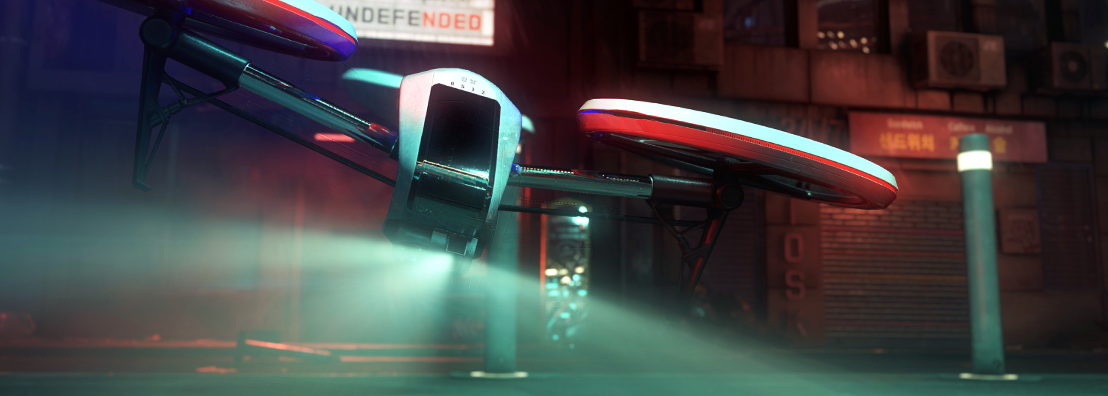
It is the last release in this whole line that reads like the old format: one studio, one technique worth isolating, one free downloadable benchmark built to prove the point.
Games became the tech demos
The old GPU demo split into two successors instead of one. Games inherited the spectacle, while benchmark suites inherited the measurement.
Hardware vendors increasingly show off a new graphics feature by shipping it inside a real commercial game rather than building a bespoke standalone application around it. Cyberpunk 2077's path-traced overdrive mode, Alan Wake 2, Portal with RTX, and Black Myth: Wukong have all served the role Dawn or Stone Giant used to play, proving what a rendering technique looks like across dozens of hours of real content instead of one showcase room. NVIDIA's RTX Remix project pushes the same idea further, letting a modder rebuild the lighting of an old game like Portal entirely in path-traced form, using a real, previously shipped game as the demo scene rather than commissioning a new one.
That shift makes sense given the previous section's argument. A feature best understood across an entire game's lighting or in motion over several seconds fits naturally inside a 40-hour game and awkwardly inside a five-minute standalone loop. The old model was a vendor tech demo demonstrating the visual feature directly; the current one is a real commercial game demonstrating it as a side effect of just being a well-made, well-lit game, with 3DMark, UNIGINE, and similar tools left to handle standardized, comparable benchmarking separately.
There was something irrationally satisfying about the old model that this new one does not quite replace. Nobody needed Dawn, Stone Giant, or Supersonic Sled. They did not make the graphics card more useful. But after spending several hundred dollars on new hardware, launching a strange little executable whose only purpose was to push that hardware somewhere your old card could not reach made the upgrade tangible in a way a game you already owned did not.
3DMark absorbed the job instead
The measurement role moved increasingly toward dedicated benchmark publishers instead of every vendor building its own showcase. UL's 3DMark now ships cross-platform, cross-vendor graphics tests on a real cadence: Speed Way (October 2022, DirectX 12 Ultimate with mesh shaders and ray-traced global illumination), Solar Bay (August 2023, cross-platform ray tracing for mobile and desktop alike), and Steel Nomad (2024, the rasterization-focused successor to Time Spy for current high-end hardware).
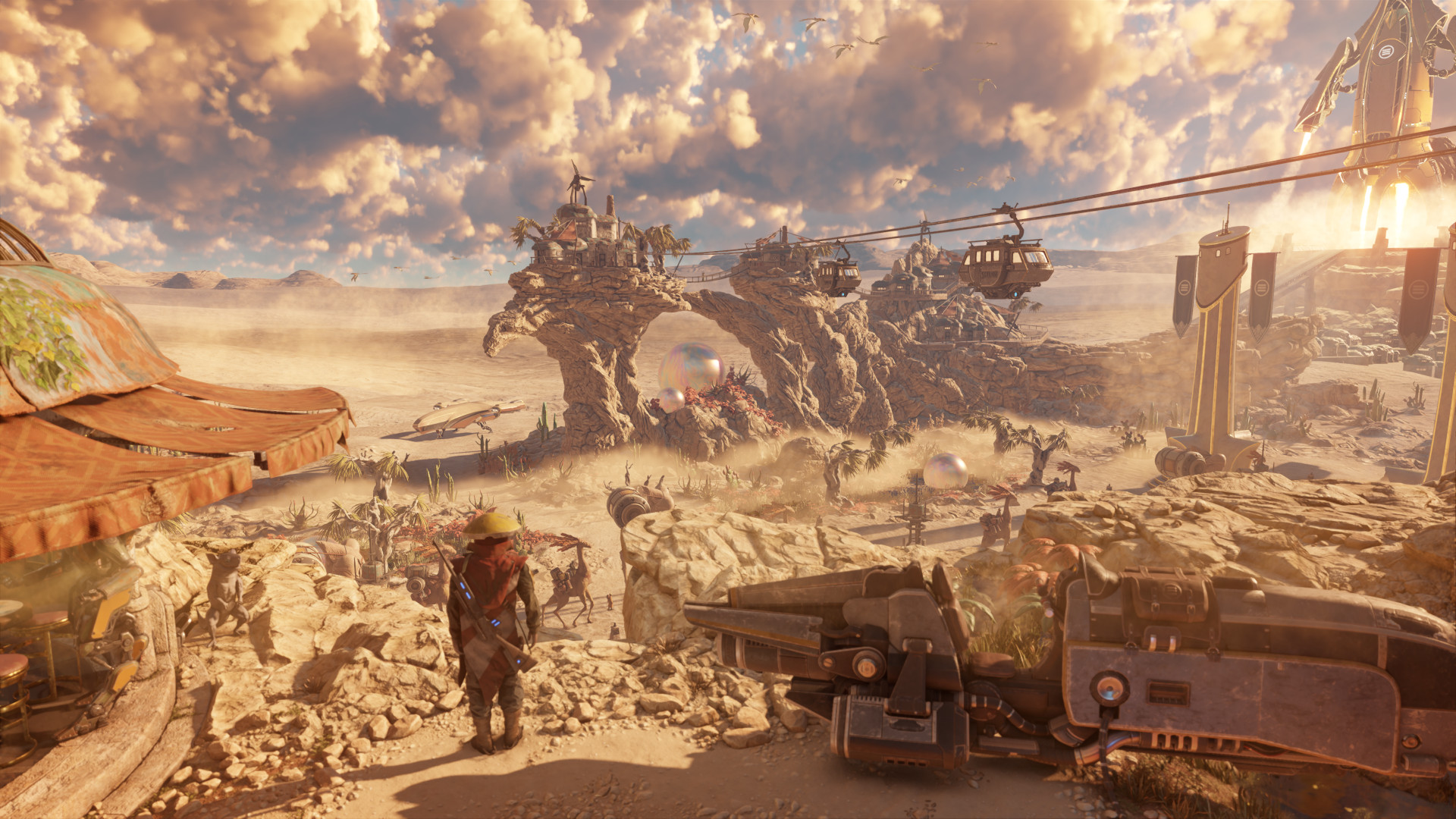
A vendor-agnostic benchmark maker is a better fit for the current era than a single vendor's demo team: modern rendering features increasingly span multiple GPU vendors and graphics APIs, making a vendor-neutral benchmark suite the more natural showcase, one that runs identically on every card. GravityMark, a smaller independent benchmark built by a former UNIGINE developer and supporting OpenGL, Vulkan, Direct3D, and Metal in one binary, follows the same logic on a lighter budget.
Run the old GPU demos yourself
Most of the era is not actually gone, just quiet. The table below lists what is still findable and where it comes from. None of these have been run and timed on current hardware for this article; the source column reflects the last confirmed official listing, not a fresh compatibility test.
| Demo | Year | Still available from | Windows 11 / modern GPU status |
|---|---|---|---|
| Dawn | 2002 | NVIDIA's own GeForce tech demo archive | Not yet tested by PC Tech Vault |
| Cascades | 2007 | NVIDIA's demo archive | Not yet tested by PC Tech Vault |
| Human Head | 2007 | NVIDIA's demo archive | Not yet tested by PC Tech Vault |
| UNIGINE Heaven | 2009 | UNIGINE's current benchmark lineup, actively distributed today | Not yet tested by PC Tech Vault |
| Design Garage | 2010 | NVIDIA's demo archive | Not yet tested by PC Tech Vault |
| Stone Giant | 2010 | NVIDIA's demo archive | Not yet tested by PC Tech Vault |
| Supersonic Sled | 2010 | NVIDIA's demo archive | Not yet tested by PC Tech Vault |
| Alien vs. Triangles | 2010 | NVIDIA's demo archive | Not yet tested by PC Tech Vault |
| A New Dawn | 2012 | NVIDIA's demo archive | Not yet tested by PC Tech Vault |
| UNIGINE Superposition | 2017 | UNIGINE's current benchmark lineup, actively distributed today | Not yet tested by PC Tech Vault |
| Neon Noir | 2019 | Crytek's own site, still a free download | Not yet tested by PC Tech Vault |
AMD's GPUOpen also still hosts the March of the Froblins installer from the earlier section, in the same "still there, not yet verified on current hardware" category as the rest of this list.
We would rather say "not yet tested" than guess. A follow-up worth doing properly: actually install each of these on current Windows with a modern GeForce card, record the real result, and turn this table into a genuine compatibility reference instead of a list of links. If that happens, it will say so here, with a real test date attached, not a blanket assumption that a fifteen-year-old installer behaves the same way on a fifteen-year-newer driver stack.
A modern GPU does not really need its own little showcase program anymore. Reviews, real games, benchmark suites, and video all show exactly what a card does before it even arrives at the buyer's door. But something was lost when the graphics card stopped arriving with its own small digital playground, one built for nothing else but to give it somewhere to show off, and running Heaven again on a current GPU is still a fast way to see exactly how far tessellation and lighting have moved since 2009, since the scene has not changed at all and the hardware under it has.
Sources
- NVIDIA GPU Gems: animation in the Dawn demo
- Destructoid: A New Dawn tech demo
- Geeks3D: A New Dawn released for GeForce GTX 600
- ShootOnline: Rhinofx and Ruby, The Assassin
- AMD GPUOpen: March of the Froblins download
- HotHardware: NVIDIA’s Human Head demo on GeForce 8800 Ultra
- NVIDIA: current GeForce tech demos archive, with original release dates
- Geeks3D: Design Garage, Supersonic Sled and Stone Giant for GeForce GTX 400
- Geeks3D: Alien vs. Triangles on GeForce GTX 580
- Wikipedia: Heaven Benchmark, unveiled at the Windows 7 launch
- UNIGINE: current benchmark lineup
- NVIDIA Blog: Racer RTX built on Omniverse
- NVIDIA Blog: Marbles RTX playable sample
- HotHardware: Neon Noir on Vega 56, no RT cores needed
- UL Benchmarks: 3DMark Speed Way launch
- UL Benchmarks: 3DMark Steel Nomad is out now
- Phoronix: GravityMark, a cross-API benchmark from a former UNIGINE developer