

On 21 October 2026, Electronic Arts told its staff that BioWare is closing. The memo, signed by studio chief Cam Weber and operating chief David Tinson, ends the studio in Edmonton and stops early work on the next Mass Effect. It came with a wider round of cuts that Variety puts at about 3 percent of EA, roughly 400 people. After more than thirty years, the studio that taught a whole generation what a role-playing game could be is gone.
I would love to write a eulogy full of anger at EA, and EA deserves its share. But if I am honest, BioWare did not die on a Tuesday in October. It died slowly, over about ten years, one game at a time, while the people making those games stopped listening to the people playing them.
When BioWare was the best in the business
Start with what we lost. In 2003, Star Wars: Knights of the Old Republic took a licence everyone thought they knew and found a story in it that still surprises new players. In 2009, Dragon Age: Origins shipped more than 3.2 million copies in its first months, according to EA’s own announcement at the time. Then came the Mass Effect trilogy, which made millions of us care about a crew of space misfits more than about some of our relatives.
Those games had something in common. They trusted the player. Your choices had weight, your companions had opinions, and the world did not stop to explain itself every five minutes. Origins had gay and bisexual romances in 2009, and nobody needed a seminar to understand them. Characters were written as people first, and their beliefs came out of who they were.
The long slide
The first crack was Mass Effect: Andromeda in 2017, remembered mostly for faces that moved like they were trying to escape the skull. Then came Anthem in 2019, BioWare’s only new idea in a decade, and it was not really BioWare’s idea. It was a live-service shooter built because live-service shooters were what publishers wanted that year. It never found its audience, EA stopped updating it, and on 12 January 2026 the servers went dark for good. If you bought Anthem, you now own a very expensive icon.
Then, in October 2024, came Dragon Age: The Veilguard, ten years after Inquisition. The launch looked fine on paper: about 70,000 people played it on Steam at the peak, a record for a BioWare game there. Three months later, EA admitted that the game had “engaged” about 1.5 million players, nearly 50 percent below what it expected. “Engaged”, for the record, is the word a company uses when “sold” would be embarrassing.
The Steam numbers tell the rest. In its launch month, Veilguard averaged 23,060 players online at any moment. By September 2026 that was 464.
Two years later, a seventeen-year-old game keeps up
Here is the comparison that should have worried someone at EA long before this week. In September 2026, Veilguard averaged 464 players on Steam. Dragon Age: Origins, a game from 2009 with graphics that look like they were carved from soap, averaged 401. Inquisition, from 2014, averaged 488. Knights of the Old Republic, released when some of today’s players were not yet born, still averaged 225 players in a twenty-three-year-old Star Wars game.
Steam is not the whole market. Console players and the EA app are not in these numbers, and that is true for every game in the comparison. But a new flagship that, two years after launch, draws the same crowd as its own seventeen-year-old predecessor is not a game people come back to. It is a game they finished, or never finished, and left.
Writing for a seminar, not for players
Why did people leave? Part of it is gameplay. Veilguard turned the tactical party combat of the earlier games into a flashy action game where your companions mostly stand around waiting for a button press. The world lost its edge: the dark, political fantasy of Origins became bright and soft, and too many conflicts end with someone validating someone else’s feelings.
The bigger part, for me, is the writing. Veilguard does not let its characters be people. It makes them deliver messages. The best-known example is Taash, a companion whose personal quest is mostly about gender identity, explained in dialogue that sounds like it was copied from an HR training slide. In one scene, the pirate Isabela uses the wrong pronoun for Taash, says sorry, and then walks over and does push-ups as penance. It is a real scene in a real game that cost a fortune to make. Even coverage that defends the game admits that this moment got far more attention than anything else in it, and not the good kind.
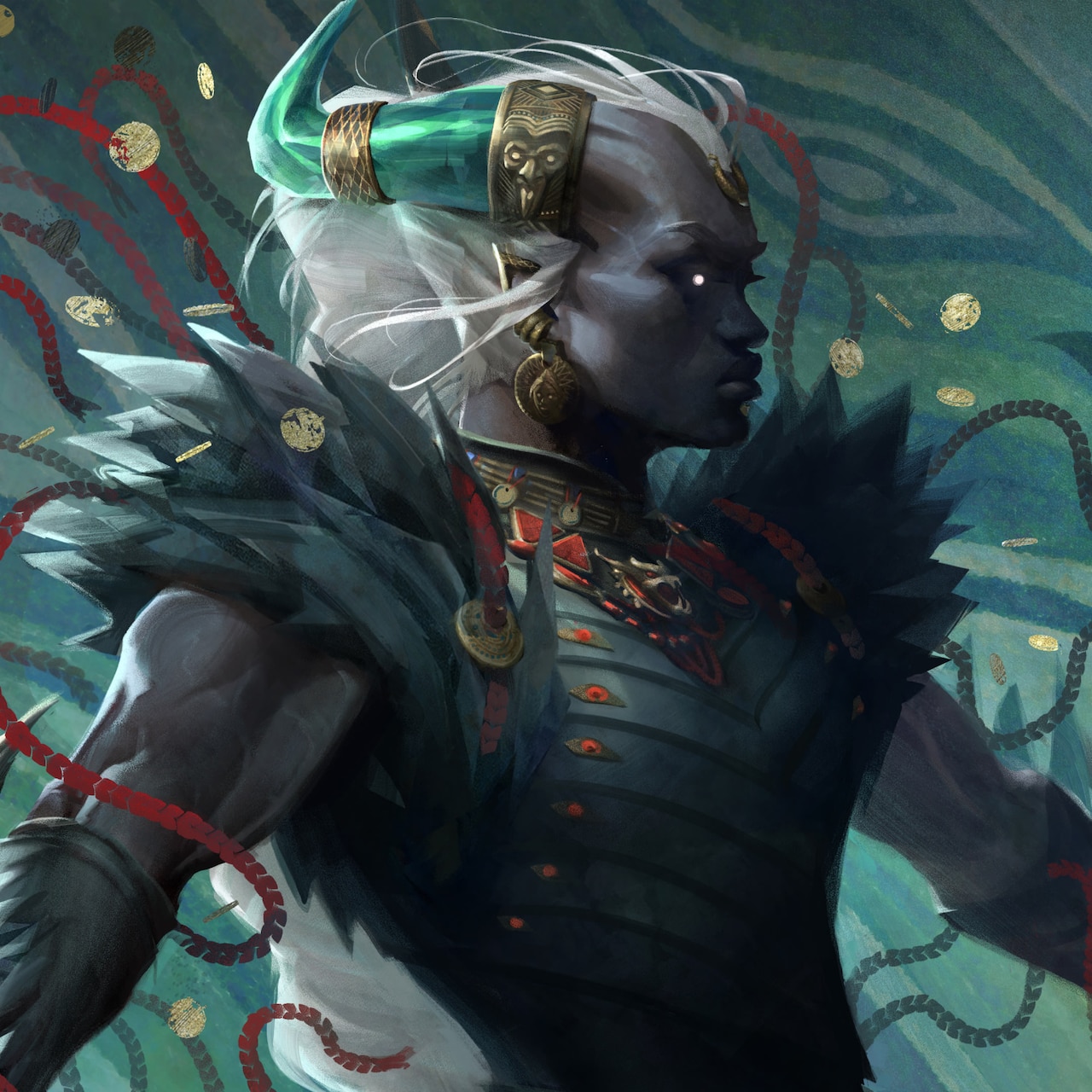
Let me be clear about what my problem is. It is not that a game has a non-binary character. Dragon Age has always had characters of every kind, and Origins handled them without fuss. The problem is the lecture. When a fantasy world stops to tell the player how to talk, the player stops feeling like a hero in that world and starts feeling like a student in detention. Nobody bought a dragon game to be corrected by it. And a studio that writes for applause on social media, not for the people who pay for the game, ends up with neither.
No new ideas, only old names
Look at what BioWare actually released after the Mass Effect trilogy ended in 2012: another Mass Effect, two more Dragon Age games and Anthem. The only new world in fourteen years was a loot shooter that died before it was seven. Everything else was a famous name carried forward, with less of what made the name famous each time.
That is where EA carries its share of the blame. It pushed BioWare onto an engine built for shooters, chased live-service money, and asked an RPG studio to be something else for most of a decade. But BioWare’s own leadership chose the tone, the writing and the priorities of its last games, and players answered in the only language that counts: they did not show up.
The money saw it coming
None of this was a surprise to anyone reading the numbers. In 2007 EA paid $860 million for BioWare and Pandemic, then the biggest studio purchase the industry had seen. For a while it looked like a bargain. Origins shipped 3.2 million copies in a few months, and Inquisition went on to sell more than 12 million, which according to its former executive producer Mark Darrah “massively oversold” EA’s own projections.
After that, every line on the chart pointed down. Anthem was switched off. Veilguard reached about 1.5 million players against a target of roughly three million, and EA lowered its full-year forecast to $7 billion to $7.15 billion, down from $7.5 billion to $7.8 billion, and named Dragon Age as one of the reasons. The studio shrank with its results: about 250 people worked at BioWare before EA cut around 50 jobs in 2023, and by this week roughly 50 were left to lose theirs. When a company that paid $860 million for you is down to a team that fits in one meeting room, the memo is a formality.
What did Veilguard cost? EA has never said. Estimates from analysts and players online range from about $80 million to more than $250 million, after nearly a decade of development that included at least one restart. Now set them against what we do know. If every one of the 1.5 million players had paid the full $70, which they did not, since EA’s figure includes subscribers who played through EA Play, the launch quarter would have brought in about $105 million before the stores and platforms took their cut. Even the cheapest budget guess barely fits under that line, and the expensive ones are nowhere near it.
What is left
The old games are still here. Knights of the Old Republic, Origins and the Mass Effect trilogy are cheap, they run on almost anything, and they are still better role-playing games than most of what came out this year. Mass Effect Legendary Edition averaged more than 2,200 players on Steam in September 2026, almost five times Veilguard.
EA says the Mass Effect name lives on, maybe with another studio. I hope whoever gets it plays the old games first and remembers why we loved them: not because they told us what to think, but because they let us decide who to be. BioWare used to know that. It is a shame it forgot before EA did the rest.