

ASUS has announced the Ascent QN10, a mini PC built on Qualcomm's Snapdragon X2 Elite platform, packing an 18-core Oryon CPU and a Hexagon NPU rated at 80 TOPS. ASUS calls it the world's first AI mini PC with an 80-TOPS NPU, a narrow enough claim to be worth reading carefully.
The number that actually matters here is the volume. At under 0.7 litres, the QN10 is, by ASUS's own arithmetic, 86 percent smaller than a conventional 5-litre desktop. The NPU rating is the other half of the pitch: 80 TOPS clears the 40-TOPS floor Microsoft set for Copilot+ branding with room to spare, and it's the number ASUS is leaning on to call local inference practical on a machine this size.
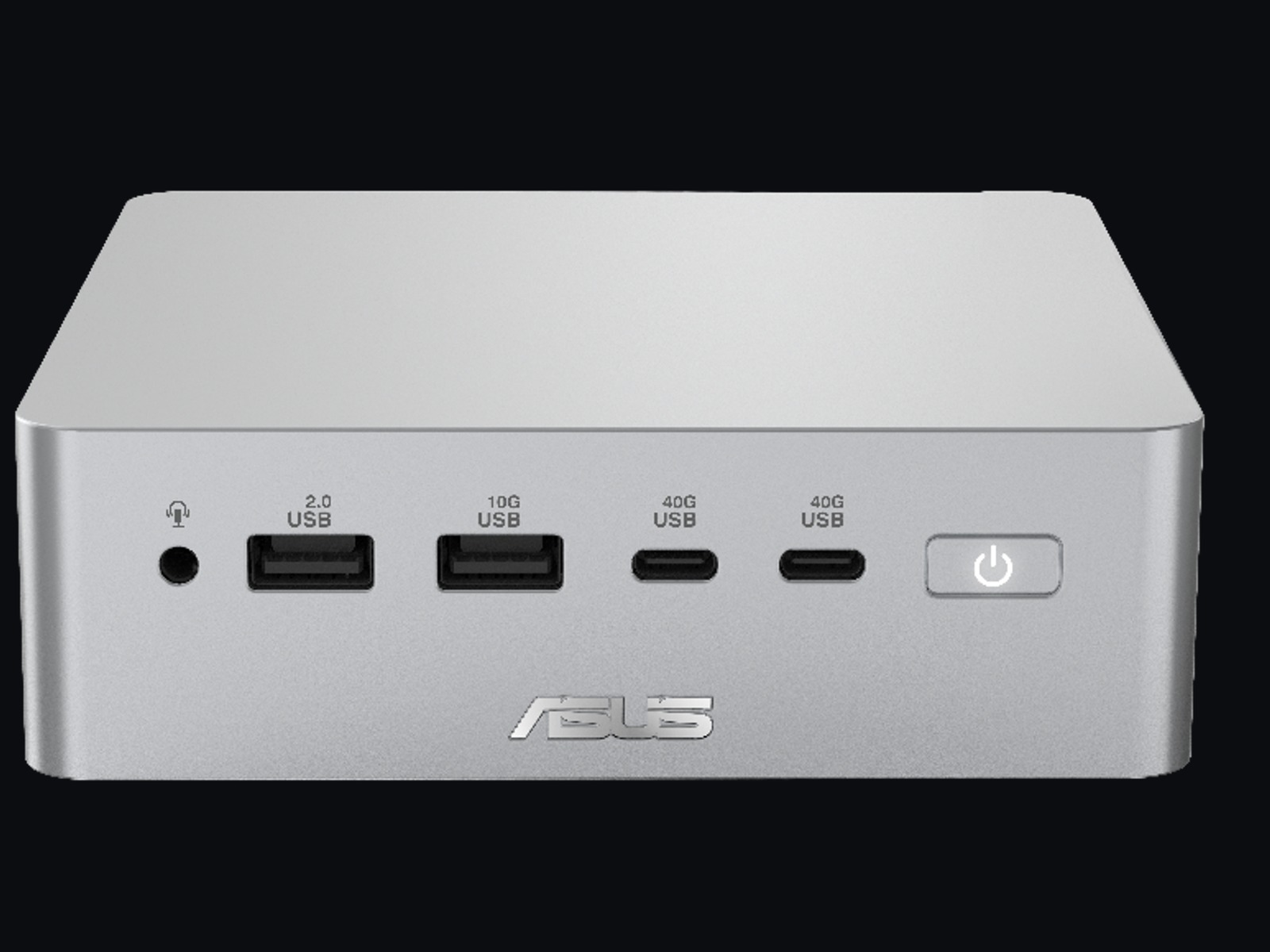
An Arm Mini PC Aimed at Developers, Not Living Rooms
Graphics come from an integrated Qualcomm Adreno GPU, which ASUS says is 2.3 times faster than the previous generation. That's a vendor comparison against its own prior part, not against anything from AMD or Intel, and it should be read that way.
The security list is the enterprise half of the pitch: fTPM 2.0 for hardware-rooted credentials and encryption, plus Microsoft's Pluton processor for identity and key protection. ASUS describes the whole setup as chip-to-cloud, spanning hardware, firmware, operating system, and cloud.
For anyone planning to actually build on it, the more useful detail is the software path. The QN10 has access to Qualcomm AI Hub, which carries more than 175 pre-optimised models and supports bringing your own model or your own data. That, more than the TOPS figure, is what decides whether a small Arm box is a development target or an ornament.
The Questions ASUS Didn't Answer
There's no price and no availability date in the announcement. There's also no memory or storage configuration, no rear port list, and no power figure beyond a general claim of low consumption and quiet operation. The front I/O is visible in the product shot above, but ASUS does not enumerate it, and says nothing about what is on the back.
That last omission is the interesting one. Sustained performance in a sub-litre chassis is a thermal problem before it's a silicon problem, and "cool and quiet operation" is a claim, not a measurement. An 18-core CPU and an 80-TOPS NPU packed into 0.7 litres will be limited by whatever the cooling can carry, and nothing in the announcement says what that is.
Arm mini PCs have been arriving steadily since Snapdragon X launched, and the pattern has held: strong efficiency, genuine NPU capability, and a software story that depends entirely on what the buyer intends to run. The QN10 looks like a capable version of that, and like every other one, it'll be judged on whether the applications people actually need are native yet.