
The DLSS 5 Back-Ports Show Where the Hardware Line Really Sits
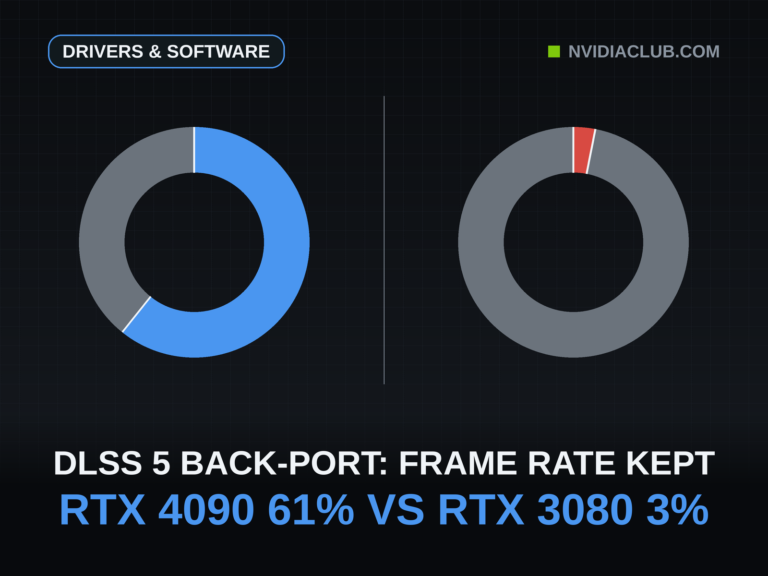
Modders have pushed the leaked DLSS 5 runtime from Blackwell down to Ada, Ampere and now Turing. The frame rates say more about NVIDIA's likely support list than the ports do.
Modders have pushed the leaked DLSS 5 runtime from Blackwell down to Ada, Ampere and now Turing. The frame rates say more about NVIDIA's likely support list than the ports do.
DLSS 4.5 Ray Reconstruction reached the NVIDIA app behind an Early Access opt-in, 616.56 ended a 29-day driver gap on a new branch that quietly changes OpenCL's default compiler, and Gamescom filled September with promises.
A failed drive is now settled by a clause most buyers never read, YMTC wants the NAND crown by 2027, and Samsung's new Odyssey OLEDs change subpixels rather than headline numbers.
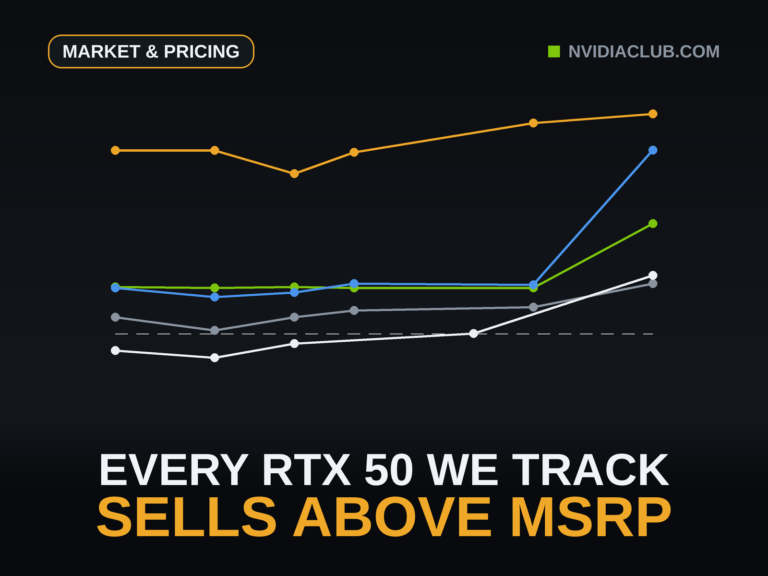
Our tracked US retail medians put all eight RTX 50 cards above launch MSRP, CPUs below it, and a 64GB DDR5 kit above the price of an RTX 5070 Ti.
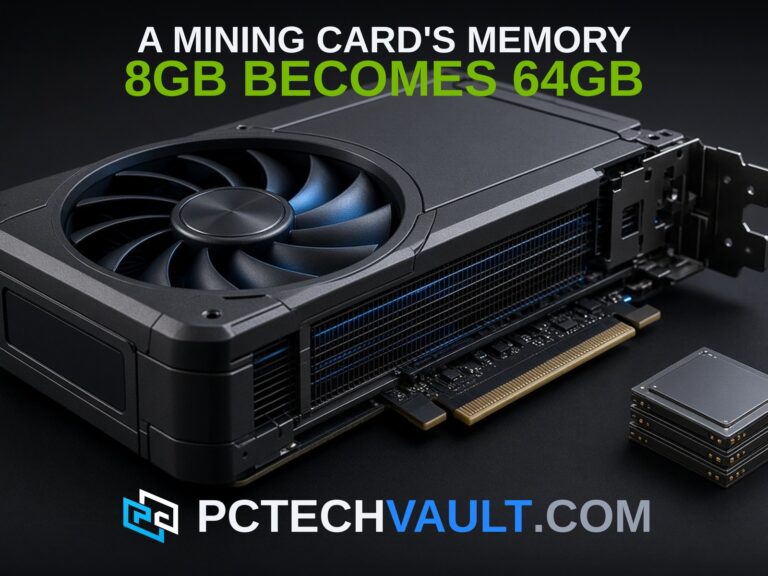
A GPL tool restores the HBM2e NVIDIA disabled on the CMP 170HX mining card, and Hydra's preview build raises RTX 50 memory clocks and power limits. What each one unlocks, and what it costs to use.
GeForce NOW's native Linux app graduated from beta and Chromebooks gained full library access the same day four games shipped or previewed DLSS 4.5, while the Game Ready driver stayed quiet for a third week running.
GeForce 610.88 removes a crash the driver itself introduced in Halo: Campaign Evolved, while Battlefield 6's RTX 50 crash got fixed from the game side.
Week ending August 3: the GeForce channel stayed quiet after 610.88, so NVIDIA's news came from the corporate blog instead, from cloud streaming to the CPU it uses to design its own chips.
With memory prices high and no new mainstream GPU worth queuing for, the gains this cycle landed in drivers and tools, not silicon: FSR 4.1 reaching older Radeon cards, driver strings hinting at 8x frame generation, and an Afterburner heatmap that shows where a GPU really runs on its voltage/frequency curve.
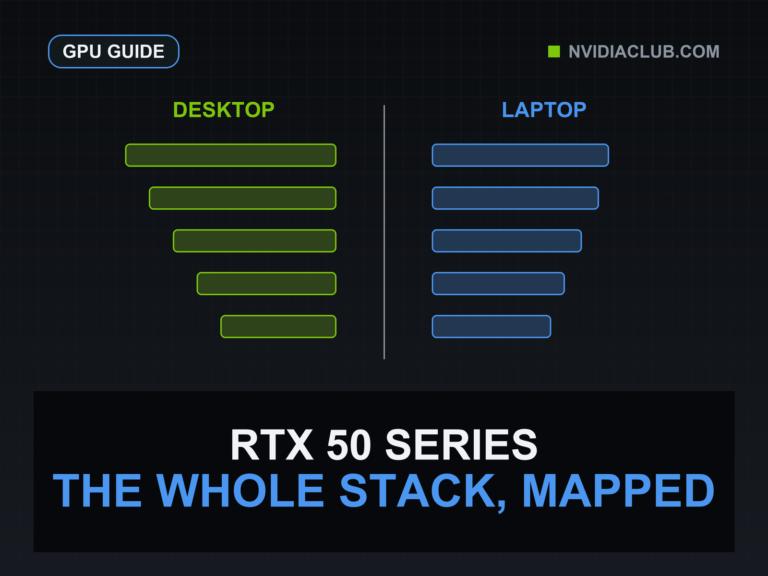
The RTX 50 series pairs a real feature jump, GDDR7, PCIe 5.0, DisplayPort 2.1, and DLSS 4 Multi Frame Generation, with a node that did not change and a launch that went sideways on connectors and missing ROPs. This guide maps the whole Blackwell stack and what each name actually buys.