

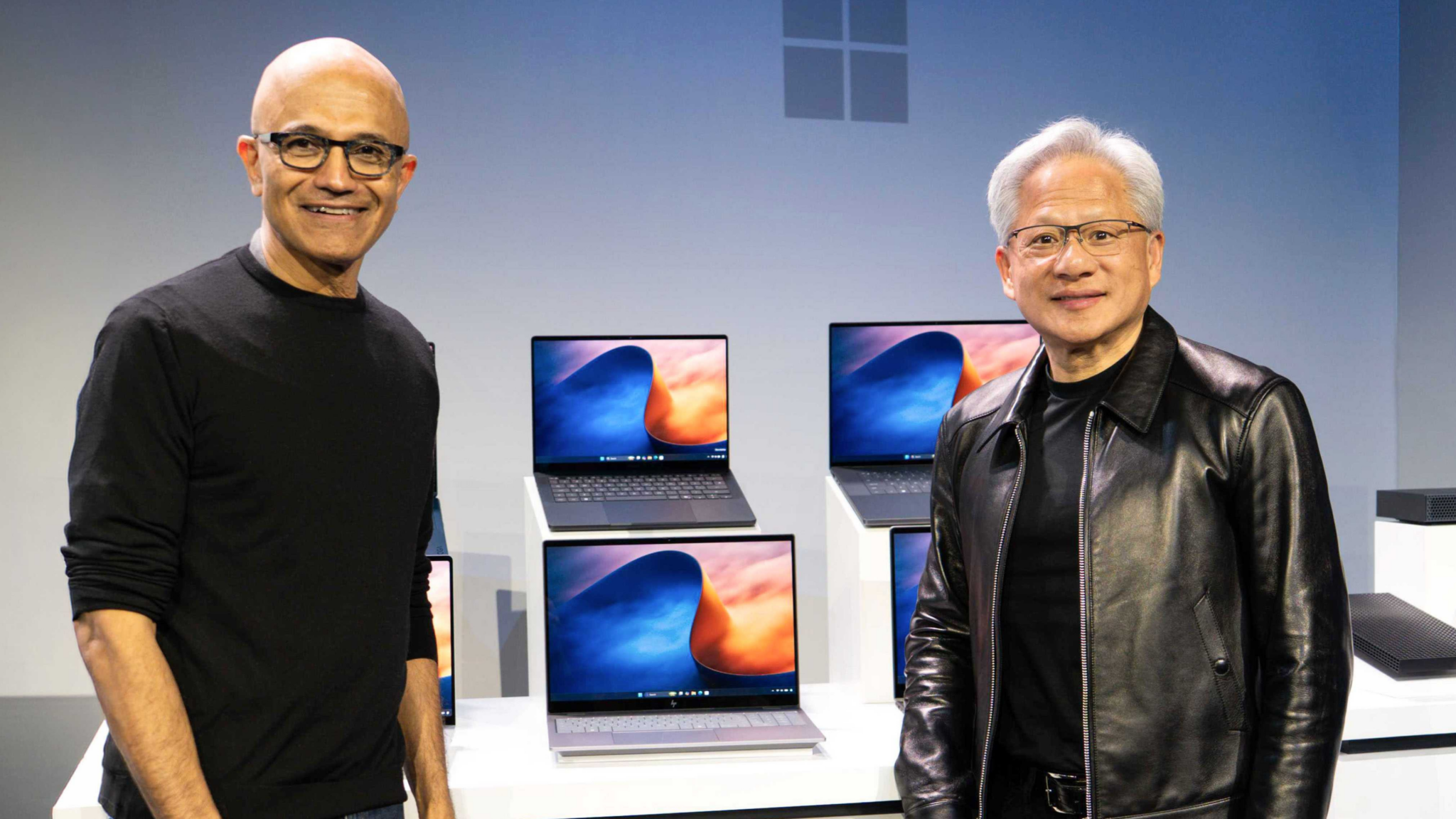
NVIDIA says the RTX Spark laptops it launched with Microsoft on October 7 can run models such as Qwen 3.8 Flash Next, which it describes as a 125B model, entirely on the machine. Preorders are open for an October 16 release from Acer, ASUS, Dell, HP, Lenovo, Microsoft, MSI and Gigabyte, and compact desktops with the same chip follow in November.
A 125B model fits in 128GB of unified memory at about 4 bits per weight, with little left over at 8
RTX Spark pairs a Blackwell GPU with up to 6,144 cores and a Grace CPU with up to 20 cores, joined at 600 GB/s and sharing one pool of up to 128GB of memory. NVIDIA rates it at one petaflop of FP4 compute. Because the CPU and GPU draw on the same memory, that 128GB is likely the whole budget for the model, its context cache and Windows itself.
The arithmetic decides which kind of model that is. At 4 bits per weight, 125 billion parameters would likely take about 62GB. At 8 bits the weights alone would come to about 125GB, which could leave almost nothing for anything else. NVIDIA's example therefore likely reads as a roughly 4-bit model, which fits the FP4 rating it leads with. The word "up to" matters too: the post does not say which memory sizes the launch laptops ship with.
Generation speed depends on a number the launch post leaves out
NVIDIA gives the 600 GB/s link between the CPU and GPU, but not the bandwidth of the memory itself, and it gives no tokens per second for the 125B model. Local models usually generate at a pace limited by how quickly the weights can be read from memory, so the missing figure is likely the one that would tell a buyer whether a 62GB model feels usable or merely loads. Until reviewers measure a shipping laptop, the petaflop rating says little about that.
DGX Station for Windows carries 748GB of memory, 27GB less than the 775GB quoted for the Linux model in January
The same event previewed DGX Station for Windows, which NVIDIA first introduced at Computex in June. It runs the GB300 Grace Blackwell Ultra Desktop Superchip with 748GB of coherent memory and up to 20 petaFLOPS of FP4 compute, which NVIDIA says is enough for models up to a trillion parameters. Until now the machine ran only Linux; the Windows version keeps Linux AI toolchains available through WSL.
NVIDIA's January post gave the same one-trillion-parameter ceiling with 775GB of coherent memory. Neither post explains the difference. The ceiling is the same arithmetic as above: a trillion parameters at 4 bits is about 500GB of weights, which would likely leave roughly 250GB of the 748GB for context and everything else.
The latest post gives no price or release date for the Windows version and points readers to a sign-up page for availability.