

NVIDIA says a 64GB version of the DGX Spark goes on sale on October 23 from Acer, ASUS, Dell, Gigabyte, HP and MSI, starting at $4,999. It keeps the GB10 Grace Blackwell Superchip and the software stack of the 128GB model. What it gives up is memory, and with it the size of model the machine can run.
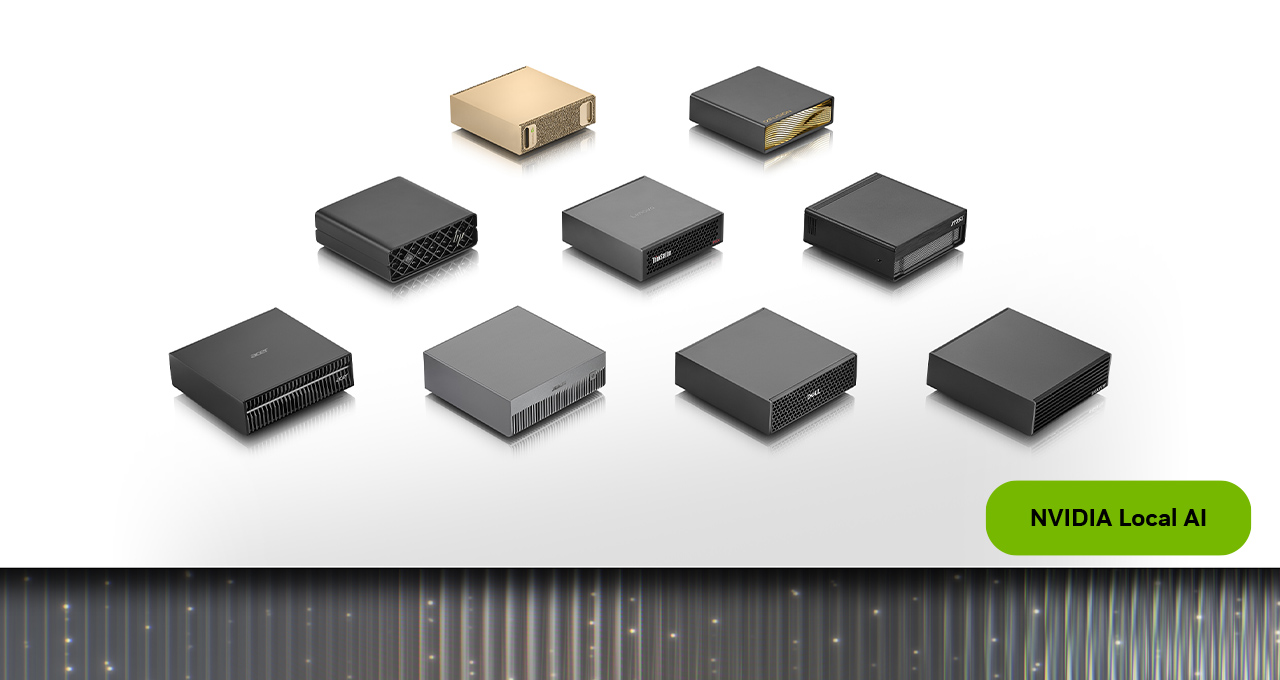
The 64GB model tops out at 100 billion parameters, against 200 billion for the 128GB unit
NVIDIA’s DGX Spark product page lists a model ceiling for each memory size: up to 100 billion parameters at 64GB and 200 billion at 128GB. This configuration is sold only through OEM partners, and when we read the page for this article it still showed the unit as “coming soon” with a notify-me button.
Two 64GB units can be combined to reach 128GB of memory
Two 64GB units joined by a QSFP cable pool their memory to 128GB, NVIDIA says, and the product page gives that pair the same ceiling as a single 128GB unit, 200 billion parameters. In NVIDIA’s Qwen3.8 27B test two clustered systems delivered up to 1.7x the performance of one, alongside twice the memory bandwidth, though the announcement gives no test configuration. At the $4,999 starting price a pair comes to $9,998 or more, and the announcement gives no price for the 128GB configuration.
Some of the launch software and playbooks are still listed as coming soon
Some of the tooling is not out yet. The Sync Model Launcher, which sets up Qwen3.8 27B and OpenCode on one unit or a cluster, arrives at the end of the month, NVIDIA says. The announcement also lists three playbooks as coming soon to 64GB devices: serving models with vLLM, running OpenClaw with a local LLM, and connecting multiple DGX Sparks for distributed workloads.
Our view: the product page does not state the precision behind its ceilings. At 8-bit precision the weights of a 100B model alone would take about 100GB, so NVIDIA’s figures likely assume weights squeezed to roughly 4 bits. The context cache and the operating system draw on the same unified memory, so a model near the ceiling would leave little for either.