
DLSS 5 introduced 3D-Guided Neural Rendering as an optional rendering stage that can sit alongside Super Resolution, Frame Generation, and Ray Reconstruction. It is not another name for upscaling. Super Resolution reconstructs a higher-resolution image from lower-resolution inputs. Neural Rendering adds or changes lighting and material response in the rendered image. That distinction matters for how you read stills: a sharper pore pattern or different hair look is not automatically “original detail recovered.” Some of what you see can be generated or altered by the neural model.
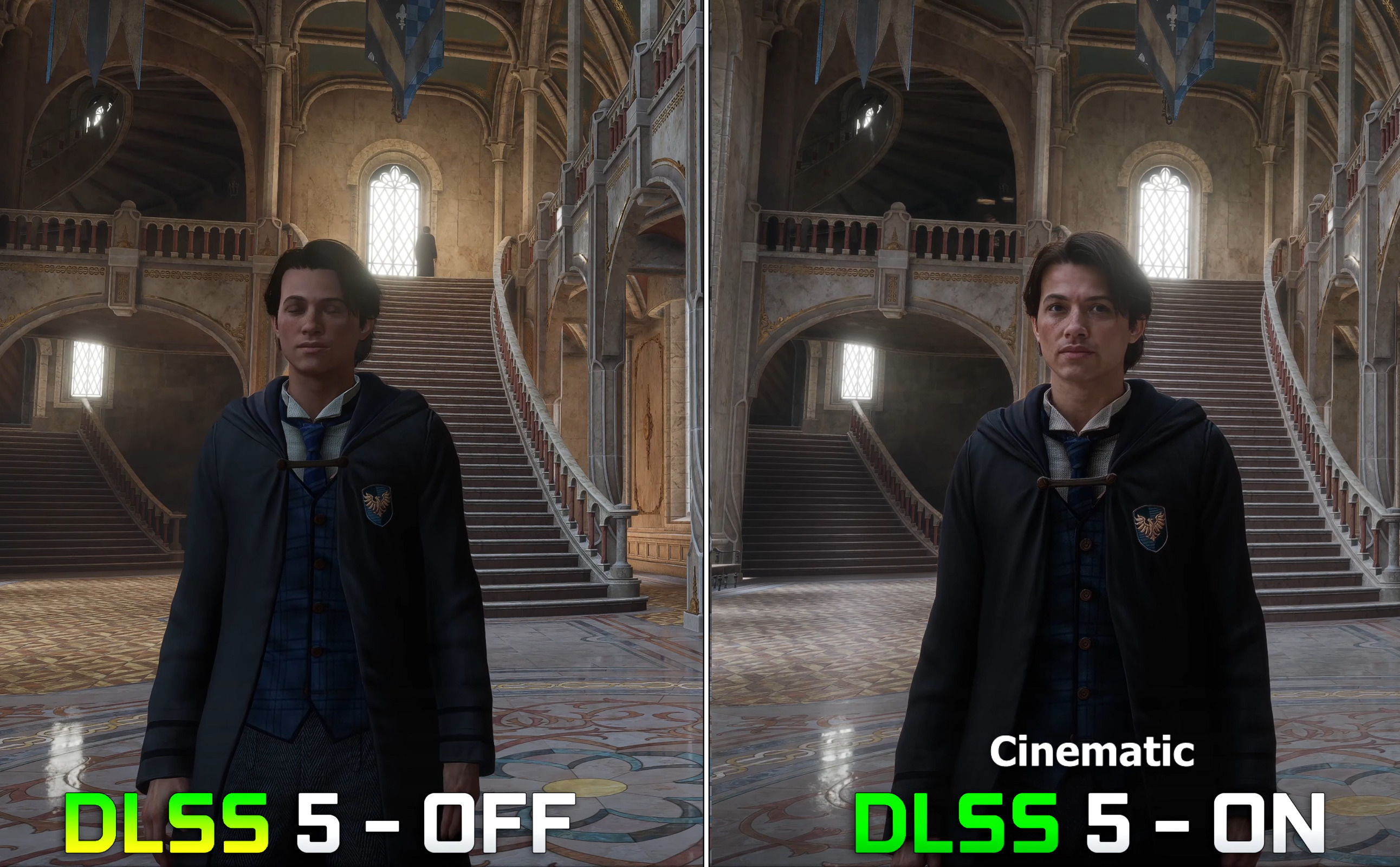
This piece is a matched on/off still-image comparison in Hogwarts Legacy on a GeForce RTX 5090. The goal is modest: show what changes in locked camera captures when Neural Rendering is enabled, note where the result looks better or simply different, and stop short of claims the stills cannot support.
Faces and materials in stills
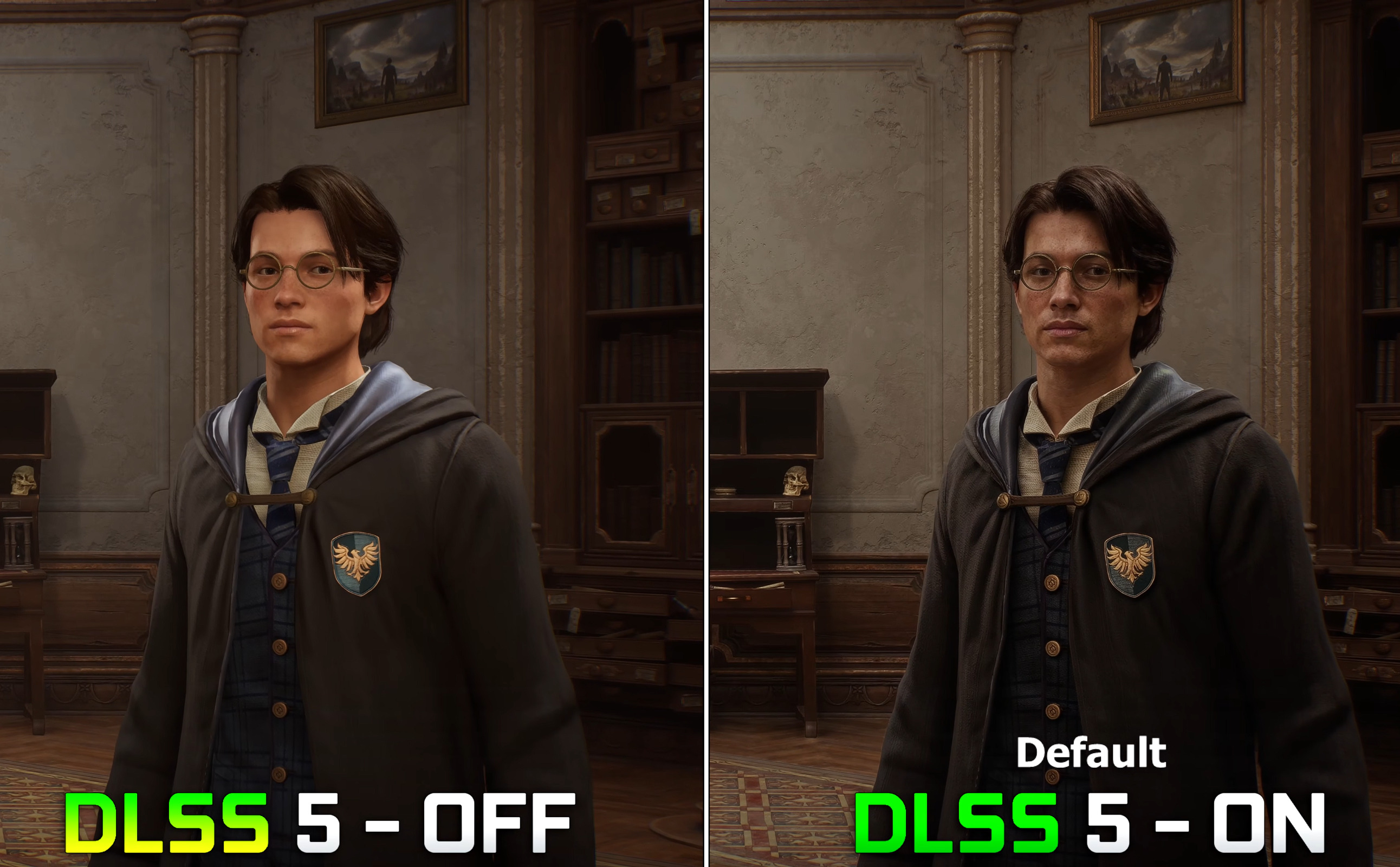
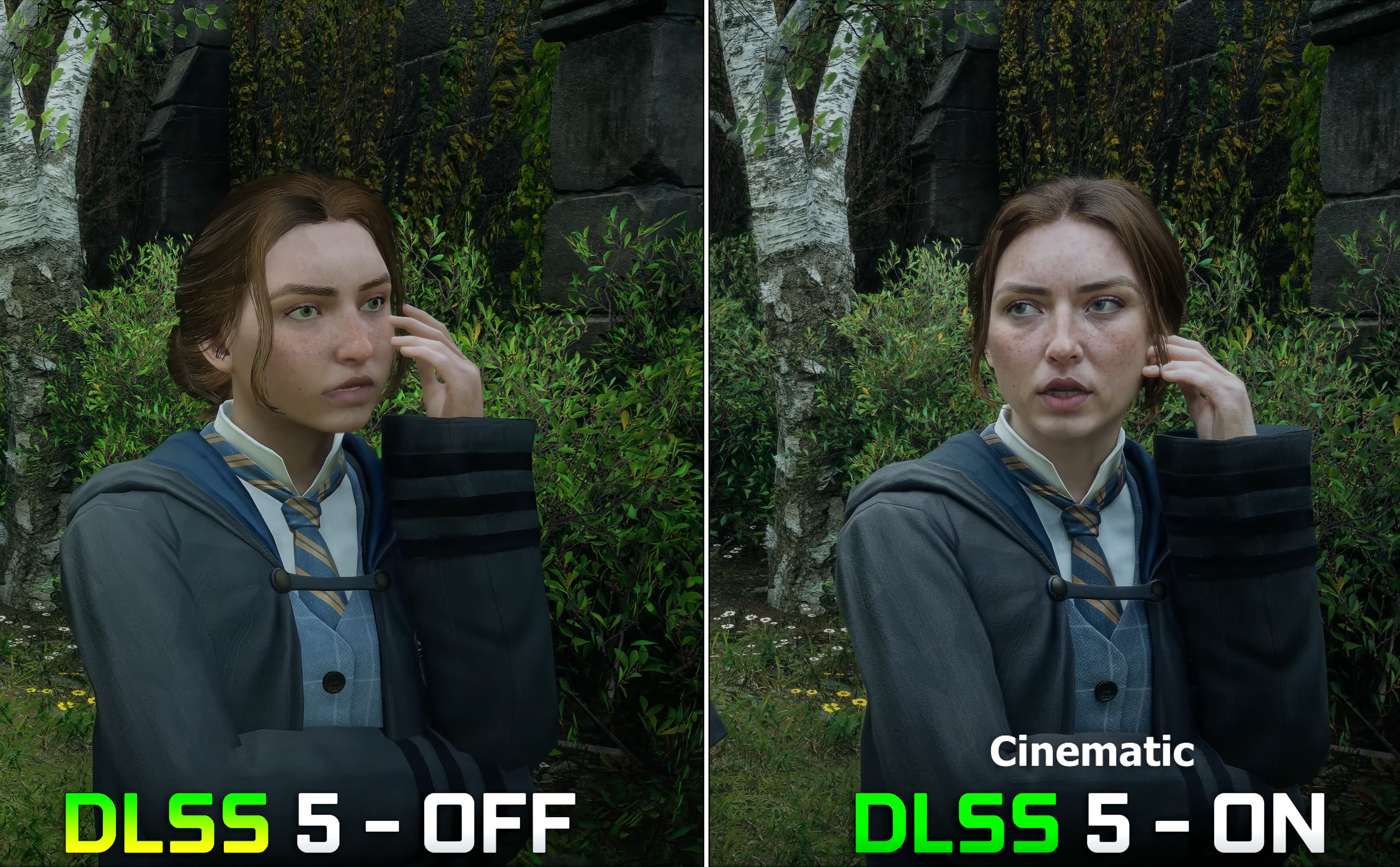
Faces are the easiest place to see a change. With Neural Rendering on, skin no longer reads as flat plastic in these locks, and hair strands separate more clearly from the surrounding blur. That can look like recovered detail, but the accurate reading is that the neural stage is changing how lighting and materials resolve in the frame. Some of the pore and strand contrast may be reconstructed or synthesized rather than simply uncovered from a lower-resolution pass.
Fabric and stone pick up a similar shift: folds and edges look more defined, and the silhouette is calmer in the still. Preference is subjective. In these two pairs I prefer the on state for faces and clothing, while staying aware that “prefer” is not the same claim as “more accurate to a native render.”
Outdoor stills: foliage and thin edges
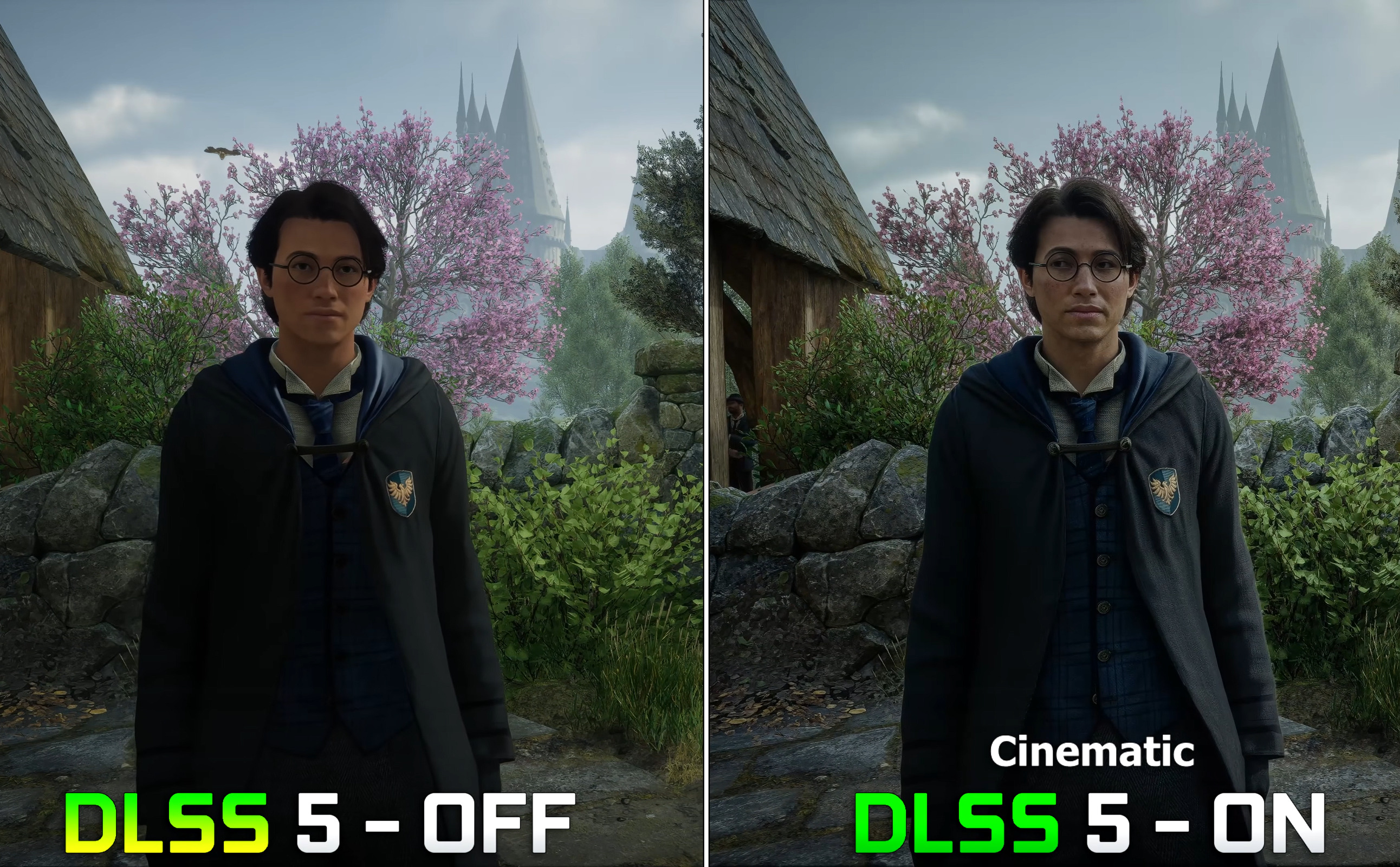
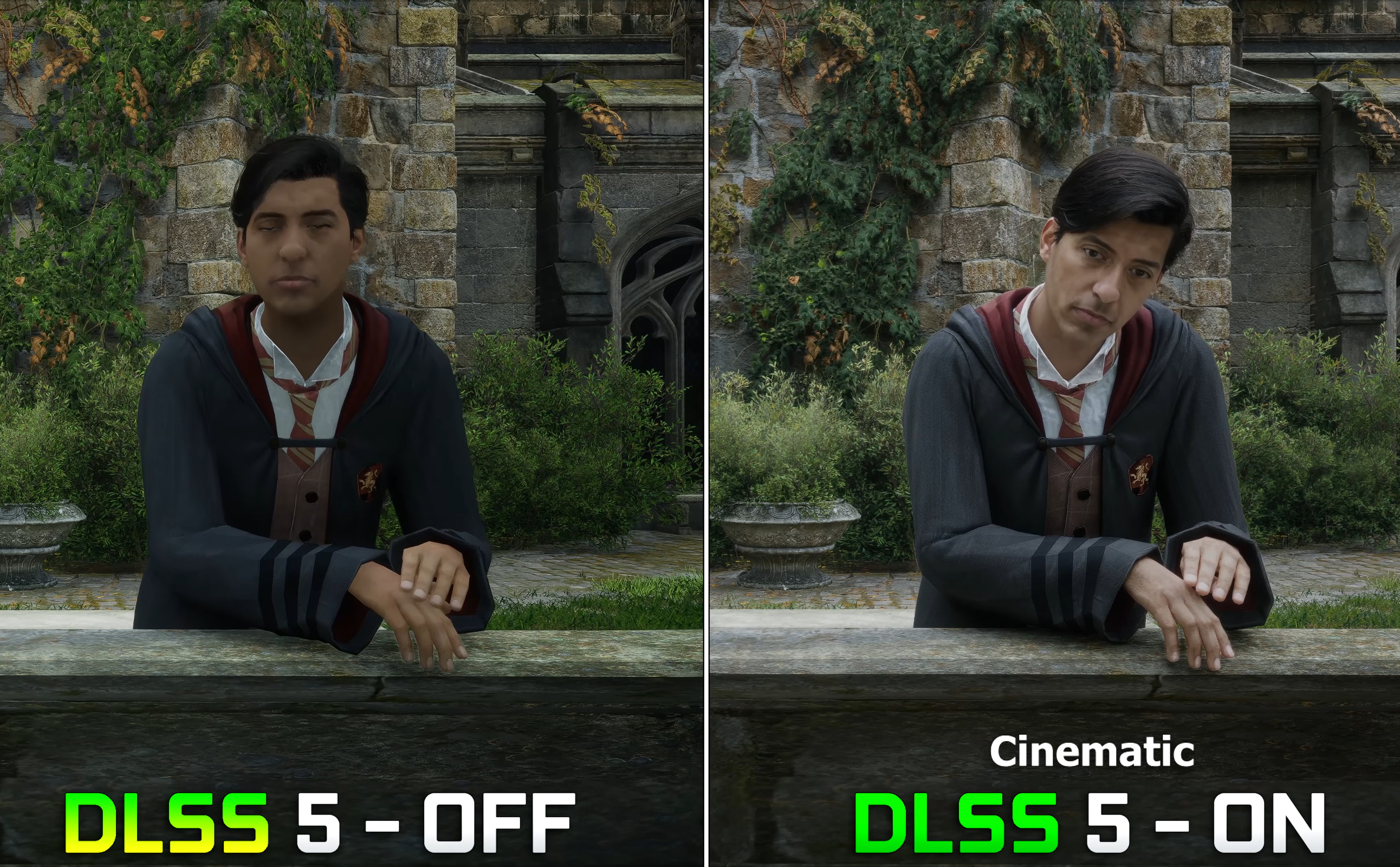
Outdoors, the stills differ most around foliage clusters, ivy, and thin stone work. With Neural Rendering on, leaf edges and distant geometry look less mushy in the capture. That is an appearance difference you can inspect in a side-by-side. It is not proof of reduced crawling or shimmer over time. Those are temporal behaviors, and a still cannot demonstrate them.
Where I prefer the on stills, it is for clearer separation in high-frequency areas. Where I would stay cautious, it is anywhere the neural stage may be inventing contrast the off image never had. The honest question for each pair is what changed, whether you like the change, and whether it looks like preservation, replacement, or a bit of both.
Limits of this comparison
This comparison evaluates still-image appearance only. It does not establish the frame-rate cost, latency impact, or image stability during movement. Neural Rendering is an additional fidelity stage, not Super Resolution trading internal resolution for performance, so any cost needs to be measured separately from upscaling settings. No frame-time numbers are reported here.
Where I landed
On these RTX 5090 stills, I prefer Neural Rendering on for faces, hair, fabric, and fine outdoor edges. The change is visible without needing a motion clip. I am not using these captures to argue temporal stability or performance. For those questions you need matched video and isolated timings, not a gallery of locks.